The Gateway to the Uintas, 16 Miles from Park City
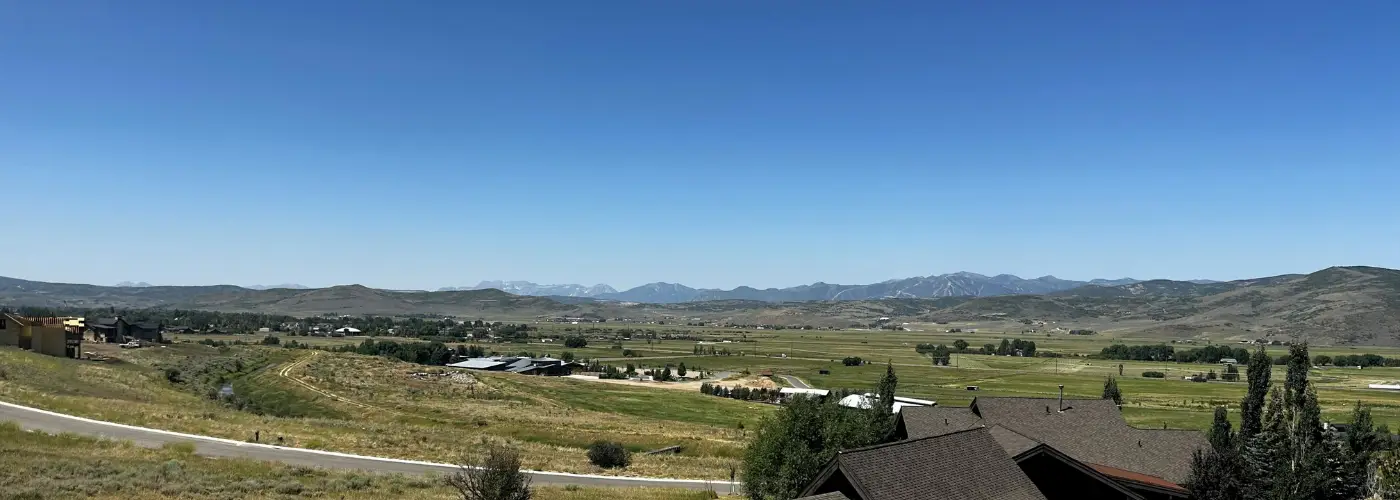
Kamas Valley sits at roughly 6,690 feet between the Wasatch and Uinta ranges, anchored by the towns of Kamas, Francis, Oakley, Peoa and Woodland. It is the working backbone of east Summit County, where ranchland still defines the road grid and where buyers can own one to five acres for less than half the price of a comparable parcel inside Park City limits. The drive to Park City Main Street runs about 25 minutes. The drive to Salt Lake City International Airport runs about 50 minutes. The drive to the Jordanelle Reservoir runs 12 minutes.
The valley draws two distinct buyer profiles. The first wants space, privacy and a primary residence within a defined school district. The second wants a second home with usable land, mountain views and proximity to Deer Valley, Park City Mountain, the Jordanelle and the blue-ribbon Provo River. Both profiles find product here that simply does not exist closer to the resorts: full acreage with water rights, equestrian setups, and custom homes built to current snow-load codes on parcels large enough to matter.
This page covers the valley as a whole. For detached single-family inventory, see Kamas Valley homes for sale. For attached product, see Kamas Valley condos for sale.
On This Page
Market Data | Submarkets | Subdivisions | Water Rights | Short-Term Rentals | Schools & Commute | Recreation | Pros & Trade-Offs | Buyer Checklist | Seller Considerations | Why Derrik | Related Pages | FAQ | Listings
Kamas Valley Market Data
The detached single-family segment is the dominant market here. Over the most recent twelve-month cycle of closed sales, 95 detached homes sold across the valley with a median sale price of $1,045,000 and a median price per finished square foot of $427. The average sale-to-list ratio came in at 97.3 percent, with a median time on market of 30 days. The range of closed prices ran from $315,000 for an entry-level home in town to $15,000,000 for a full ranch parcel, which underscores how broad this market is.
Active detached inventory currently sits at 84 listings, with a median list price of $1,450,000. The first quartile of active list prices is $995,000. The third quartile is $2,899,000. The maximum active list price is $19,900,000. Forty of those 84 active listings sit on one acre or more.
The condo segment is much smaller. The most recent twelve-month period produced 15 closed condo sales with a median price of $489,662 and a range from $365,000 to $881,900. Active condo inventory stands at 12 listings with a median list price of $609,095.
Geography and Submarkets
Buyers researching this area should know that Kamas Valley is not a single neighborhood. The valley contains four distinct submarkets, each with its own price profile, lot character and zoning conditions.
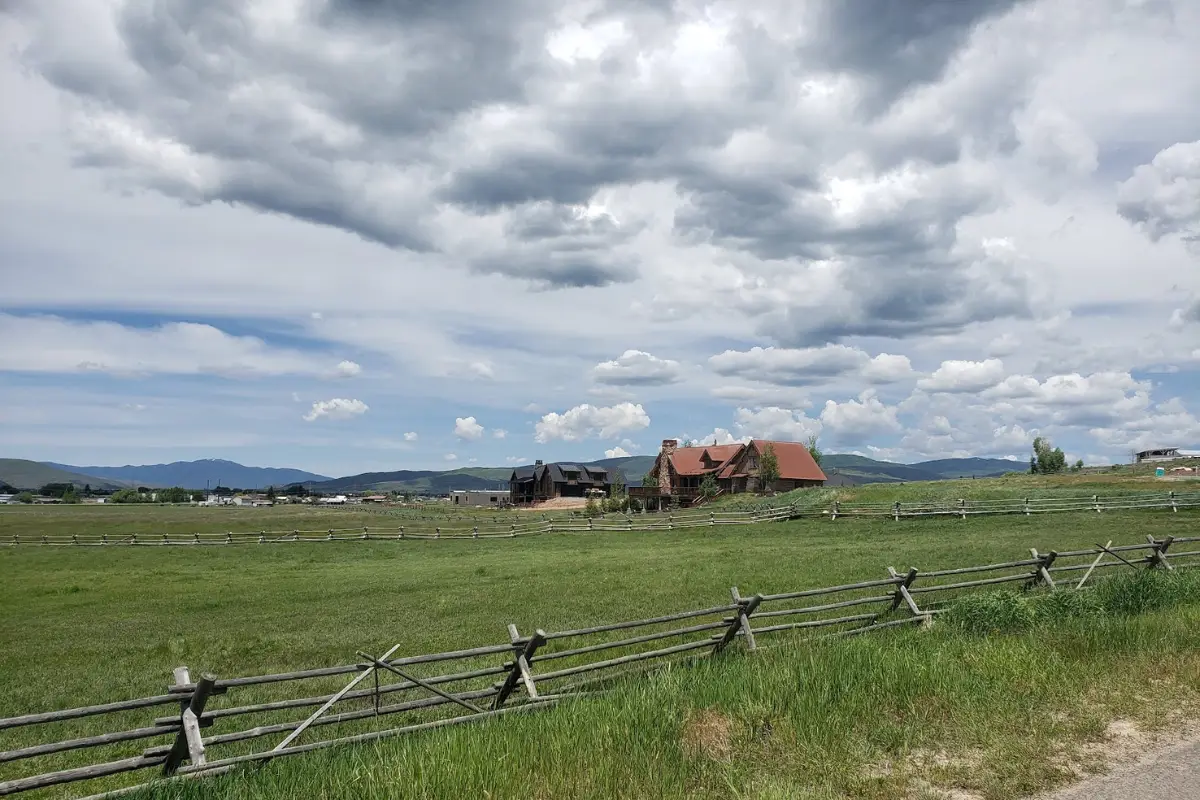
Kamas and Marion. The town of Kamas serves as the commercial spine of the valley. South Summit High School, the elementary and middle schools, the DeJoria Center and the main grocery and retail corridor sit here. Inventory inside town limits leans toward in-fill subdivisions and smaller lots, with a meaningful slice of historic farm homes on larger parcels. Marion is the rural extension north of Kamas along SR-32, where acreage parcels and traditional farms dominate.
Francis. Five minutes south of Kamas on SR-32, Francis has absorbed the largest share of new-construction subdivisions in the valley. Stewart Ranch, Hart Crossing and Wild Willow are the active builder communities here. Lots tend to run a quarter acre to a half acre, homes are typically four to five bedrooms with attached three-car garages, and HOA dues are modest. This is the most accessible price band in the valley for newly built homes.
Oakley and Weber Canyon. North of Kamas, Oakley sits along the Weber River corridor. The submarket runs from the small downtown core through Hidden Lakes, Weber Meadowview and the Beaver Springs area. Oakley homes tend to carry a stronger ranch and equestrian character than Francis, with more parcels in the one-to-five-acre range and direct river-corridor access for fly fishing.
Woodland, Samak and the Mirror Lake Corridor. Heading east from Francis on SR-35 and east from Kamas on SR-150, Woodland and Samak run along the lower edge of the Uinta Mountains. This is the most heavily treed submarket in the valley, with mature aspen and pine cover, larger average parcels and a stronger second-home percentage. Pine Mountain and Woodland Hills are the larger established subdivisions. Wolf Creek Ranch, which sits further east on the Wasatch County line, offers 160-acre conservation parcels at the top of the valley price stack.
Peoa and Browns Canyon. Northwest of Oakley along the Weber River and Rockport corridor, Peoa is the smallest of the submarkets and the most agricultural. Parcels here are typically larger, and the area carries a meaningful concentration of working ranches.
Active Subdivisions and Communities
The valley contains roughly two dozen named subdivisions and community developments. The communities below carry the most consistent inventory turnover and represent the bulk of what buyers will see come to market in any given quarter.
- High Star Ranch. The most-traded community in the valley by listing volume. Located on the north edge of Kamas with a mix of custom homes, builder homes and the DeJoria Center recreation campus.
- Stewart Ranch. Builder-driven new-construction community in Francis. Floor plans from the high $900,000s through the mid $1,200,000s, with three-car garages standard and HOA-managed common areas.
- Hart Crossing. New-construction subdivision in Francis with a strong pipeline of homes in the $900,000 to $1,400,000 band.
- Wild Willow. Newer Francis community with mountain-contemporary product on quarter-acre lots.
- Pine Mountain. Established Woodland subdivision with treed lots and a higher second-home percentage.
- Hidden Lakes. Oakley community organized around private stocked lakes, with custom homes on larger lots.
- Wolf Creek Ranch. Conservation development on the east end of the valley. 160-acre parcels with shared open space, accessed via SR-35 above Woodland.
- Beaver Springs, Canyon Rim Ranch, Weber Meadowview, Grassy Creek, Aspen Acres, Diamond Bar X, North Bench Farms. Established acreage subdivisions across the Kamas, Oakley and Marion areas.
- Woodland Hills. Larger-parcel mountain neighborhood east of Francis along the Mirror Lake corridor.
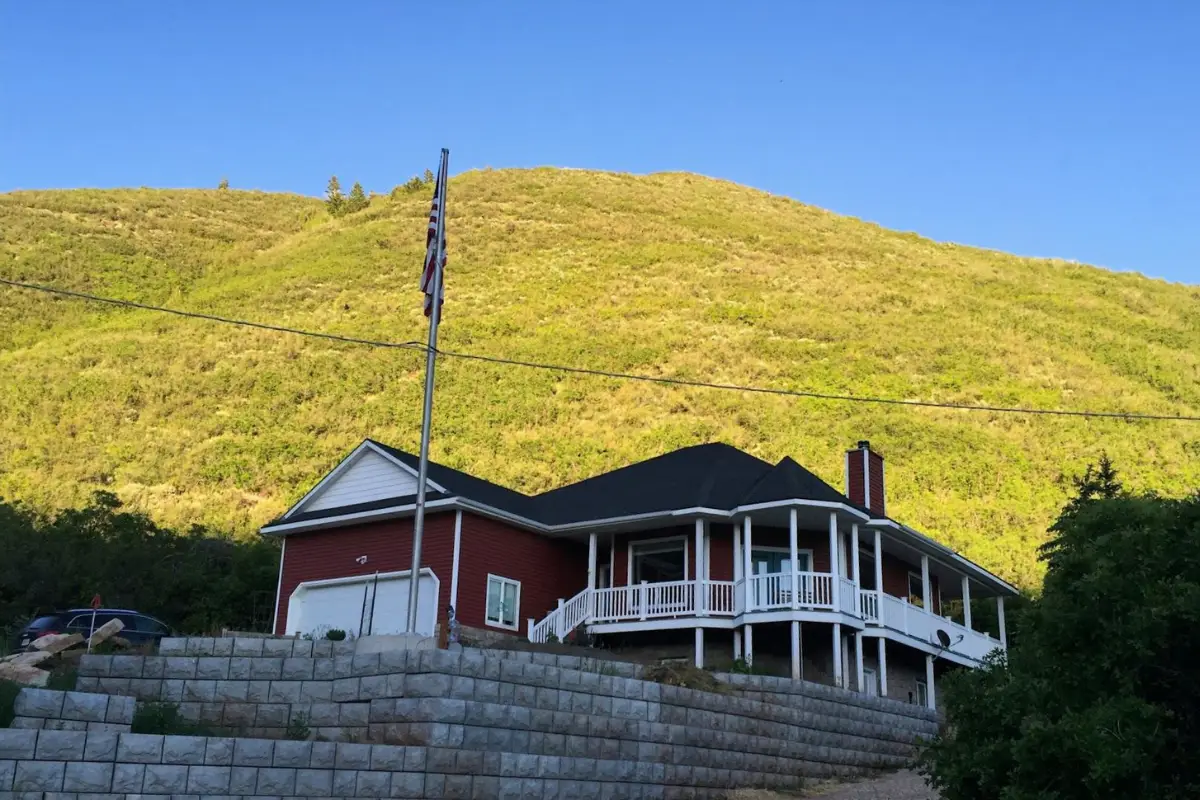
To see all active inventory across these communities filtered by price, acreage or year built, use the Kamas Valley homes search.
Water Rights, Wells and Septic: What Every Buyer Must Verify
This is the single most consequential due-diligence item in the valley, and the one buyers most often overlook when they come from outside Utah.
In Utah, water is real property and is treated separately from the land itself. A deed conveying acreage does not automatically convey water rights. A buyer who plans to irrigate pasture, water livestock, run a well for domestic use, or expand existing usage must confirm that the seller holds valid water rights and that those rights will transfer in writing through the Utah Division of Water Rights. The state engineer must approve change applications. Buyers should request the water-right number, the diversion source, the approved use and the priority date in writing before the inspection period ends.
Most non-city parcels in the valley use private wells and private septic systems. Both require Summit County Health Department approval at the time of original installation and at the time of any expansion. Buyers should mandate a professional septic inspection with a tank pump-out, a flow test on the well and a water-quality test for bacteria, nitrates and dissolved metals. Failed systems are common on older parcels, and replacement costs can run $25,000 to $60,000 depending on terrain and required system type.
Zoning runs primarily through Summit County, with municipal zoning inside Kamas and Francis town limits. Agricultural and rural-residential designations are the most common outside town. Setbacks, allowable accessory structures, horse counts per acre, and short-term-rental rules vary by zone. Snow-load standards in this elevation band are high, which affects roof design and addition permits.
Short-Term Rentals in Kamas Valley
Buyers approaching the valley with a nightly-rental investment thesis should slow down before underwriting. Short-term rental rules here are far more restrictive than they are at the Park City resort base or at Jordanelle.
Kamas city limits prohibit short-term rentals in most residential zones. Francis applies its own restrictions. Many of the established and newer HOAs in Francis and Woodland explicitly prohibit rentals under 30 days, and some prohibit rentals under six months. Of the 84 active detached listings currently in the valley, only 27 are marked as allowing nightly rental, and most of those concentrate in a small number of specific subdivisions with permissive CC&Rs. Wolf Creek Ranch is the most prominent of those.
For buyers whose primary objective is nightly-rental income, the better-positioned submarkets sit closer to the resorts. See our Jordanelle real estate page, our Canyons Village page and our Deer Valley page for inventory built around the nightly-rental model.
Schools, Services and Commute
The valley falls inside the South Summit School District. South Summit Elementary, South Summit Middle School and South Summit High School all sit in Kamas. The district is smaller and more community-oriented than the Park City School District to the west, with a strong athletics and agricultural-program profile.
Commercial services concentrate in Kamas town, with grocery, hardware, restaurants and professional services along Main Street. Larger retail and full-service medical run 25 minutes west to the Kimball Junction corridor or 20 minutes south to Heber. Park City Hospital is a 25-minute drive.
Commute times to common destinations: Park City Main Street, 25 minutes. Kimball Junction, 25 minutes. Heber, 20 minutes. Deer Valley Jordanelle base, 15 minutes. Salt Lake City International Airport, 50 minutes in normal conditions.
Recreation and Outdoor Access
The valley sits at the front door of the Uinta-Wasatch-Cache National Forest. SR-150, the Mirror Lake Scenic Byway, runs east out of Kamas to nearly 11,000 feet of elevation through the Uintas, with paid Forest Service access to alpine lakes, trailheads and campgrounds. SR-150 closes to vehicle traffic each winter, typically in late November or early December, and reopens in late May or early June depending on snowpack.
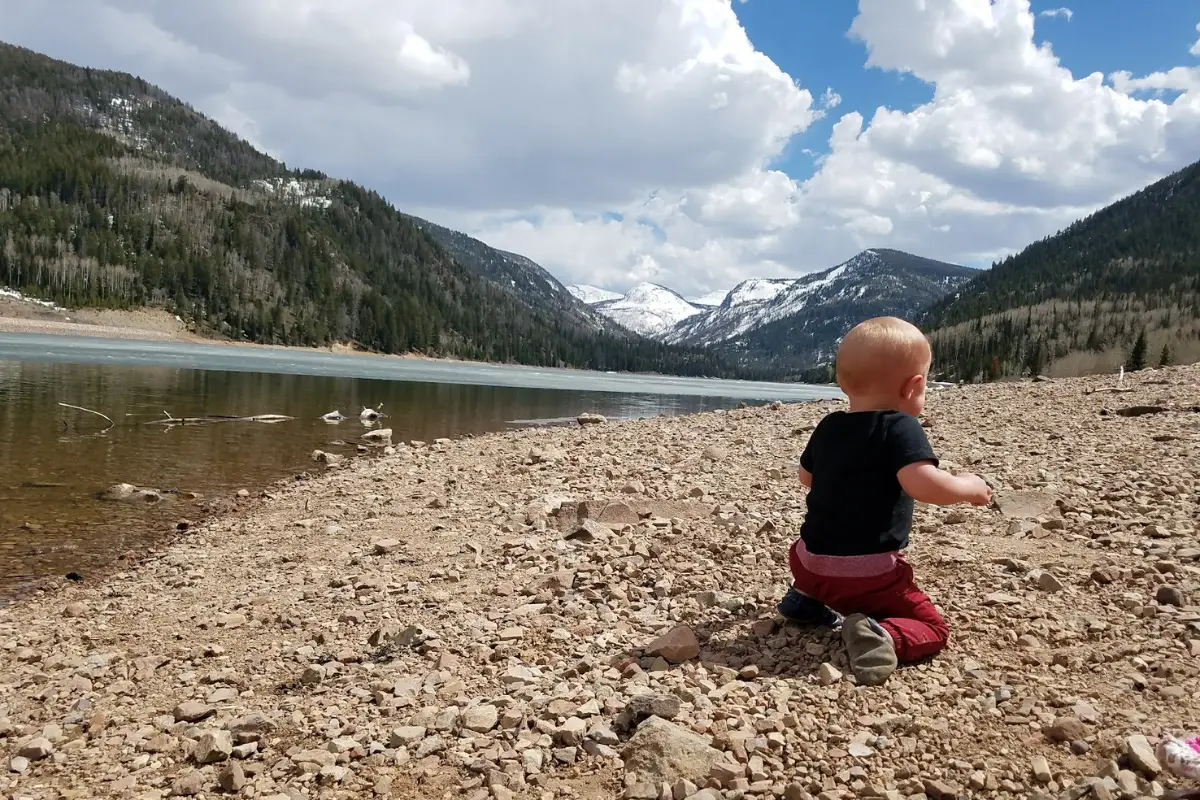
The Provo River runs the western edge of the valley and ranks among the best trout fisheries in the western United States, with a designated blue-ribbon section. The Weber River runs through Oakley and Peoa. The Jordanelle Reservoir sits 12 minutes south for boating, paddleboarding and lake fishing. Rockport Reservoir sits 15 minutes north. Snowmobile and Nordic terrain run east out of Woodland and Samak through the winter season.
Park City Mountain Resort and Deer Valley Resort both sit within 25 minutes. The new Deer Valley expansion at Jordanelle, anchored at the East Village base, sits 15 minutes from central Kamas.
Pros and Trade-Offs
The case for Kamas Valley is direct. Median detached pricing runs roughly half of what comparable square footage commands inside Park City limits, and the lot character is fundamentally different. Buyers who want one to five acres, mountain views, equestrian infrastructure or a working-ranch aesthetic find product here that does not exist closer to the resorts. Property taxes in Summit County are low by national standards, with the primary-residence exemption providing a meaningful reduction.
The trade-offs are real. The valley is rural, which means car-dependent. Winter brings heavy snow and seasonal road closures. Wildfire exposure is high in the treed submarkets to the east, and insurance carriers price that exposure in. Most parcels carry private well and septic responsibility, which adds maintenance complexity. Short-term rental income is restricted in most zones.
The valley is a strong primary-residence and second-home market. It is a weaker nightly-rental investment market than the resort-base submarkets.
Buyer Checklist for Kamas Valley
- Confirm water-right number, source, use and priority date in writing before the inspection period closes.
- Order a professional septic inspection with tank pump-out and a separate well flow test and water-quality panel.
- Verify zoning, allowed accessory structures and any HOA short-term-rental rules through the Summit County recorder and the HOA disclosure package.
- Order a snow-load structural review on any home with an addition or accessory structure permitted outside the original build.
- Request wildfire-defensible-space documentation if the parcel sits in the eastern half of the valley or in a Wolf Creek-area subdivision.
- Review insurance quotes before removing the inspection contingency. Wildfire-zone premiums have escalated.
- For investment buyers, review our 1031 exchange guide before structuring the purchase.
For the full process walk-through, see our buyer's guide.
Seller Considerations for Kamas Valley
Sellers in this market price for a defined and discerning buyer pool. The valley does not absorb mispriced inventory the way the resort markets sometimes do. The average sale-to-list ratio of 97.3 percent looks tight on paper, but it sits on top of a median of 30 days on market and a meaningful number of listings that took 90 days or more to find a buyer. Initial pricing accuracy is the single biggest determinant of net result.
Property preparation matters here. Acreage buyers are looking for working systems: fenced pasture, functional barns, irrigated land, current water-right documentation, recent septic and well service records, and clean defensible-space treatment. Sellers who can produce that documentation on day one of the listing typically transact closer to list and in less time. Sellers who cannot produce it typically face price concessions during the inspection period or a price reduction after the first 30 days.
For the full listing process and the marketing pattern we use across our luxury and acreage inventory, see our seller's guide.
Why Work With Derrik & Co.
Derrik & Co. is the luxury division of KW Park City Keller Williams Real Estate. Derrik Carlson holds the RSPS (Resort and Second-Home Property Specialist), LHC (Luxury Homes Certification), CNE and CELA credentials, with nearly two decades of transaction history across Summit and Wasatch counties. Our team covers Park City, Deer Valley, the Canyons Village, Promontory, Victory Ranch, Red Ledges, Tuhaye and the Kamas Valley as a unified market, which matters when a buyer is comparing acreage in Oakley against a ski-base condominium at Jordanelle, or when a seller wants to position a Kamas property in front of the same audience that shops Deer Valley.
The team includes Lana Harris and Grayson West as Real Estate Advisors, Holly Carlson on website and search operations, and Shelby Sisson on transaction operations. We carry active relationships with builders, water-rights attorneys, septic and well contractors, surveyors and insurance carriers who work this specific market every week.
Related Pages and Neighboring Markets
Buyers comparing Kamas Valley to nearby markets often look at the following:
- Park City real estate for the broader Wasatch Back overview.
- Jordanelle real estate for ski-base condo and nightly-rental product 12 minutes south.
- Midway real estate for Wasatch County acreage with a similar lifestyle profile.
- Heber City real estate for the larger Wasatch County market.
- Deer Valley real estate for ski-in product 20 minutes west.
- Equestrian properties for horse-zoned inventory across Summit and Wasatch counties.
- New construction for builder inventory across the region.
Frequently Asked Questions About Kamas Valley Real Estate
Where exactly is Kamas Valley?
Kamas Valley sits in eastern Summit County, Utah, at approximately 6,690 feet of elevation between the Wasatch and Uinta mountain ranges. The valley contains the towns of Kamas, Francis, Oakley, Peoa and Woodland. Park City Main Street is 16 miles west, about a 25-minute drive. Salt Lake City International Airport is approximately 50 miles west, about a 50-minute drive.
What is the median home price in Kamas Valley?
Across the most recent twelve-month period of closed sales, the median detached single-family sale price in Kamas Valley was $1,045,000, with a median price per finished square foot of $427. The median condo sale price over the same period was $489,662. Active detached listings carry a median list price of $1,450,000 and active condos carry a median list price of $609,095.
How long does it take to drive from Kamas to Park City?
The drive from central Kamas to Park City Main Street runs approximately 25 minutes in normal conditions, about 16 miles. The drive to the Kimball Junction commercial corridor runs about 25 minutes. The drive to the Deer Valley Jordanelle base, including the new Deer Valley expansion, runs about 15 minutes.
Can I run short-term rentals on a Kamas Valley property?
Short-term rentals are restricted in most of the valley. Kamas city limits prohibit nightly rentals in most residential zones, Francis applies its own restrictions, and most HOAs in Francis, Woodland and the surrounding submarkets prohibit rentals under 30 days. Of the current active detached inventory, fewer than one in three listings are marked as allowing nightly rentals. Buyers underwriting on nightly-rental income should focus on Jordanelle, Canyons Village or Deer Valley instead, where the rental model is built into the zoning.
Do water rights transfer automatically with a Kamas Valley property?
No. In Utah, water is real property and is treated separately from the land. A deed conveying land does not automatically convey water rights. Buyers who intend to irrigate, water livestock or operate a well must verify the water-right number, source, approved use and priority date in writing and confirm that the rights will transfer through the Utah Division of Water Rights. This verification must be completed before the inspection period closes.
What school district covers Kamas Valley?
The valley falls inside the South Summit School District. South Summit Elementary, South Summit Middle School and South Summit High School all sit in Kamas town. The district is smaller and more community-oriented than the Park City School District to the west.
Is Kamas Valley a buyer's market or a seller's market right now?
The valley is currently more balanced than the post-pandemic peak years. The average sale-to-list ratio of 97.3 percent indicates that priced-right inventory still transacts close to ask, but the median 30-day market time and the broader distribution of listings sitting 60 to 90-plus days indicates that mispriced inventory does not get rescued by the market. Prepared buyers have meaningful negotiation leverage. Prepared sellers still achieve strong outcomes when priced accurately.
What are the main subdivisions in Kamas Valley?
The most active subdivisions by listing volume are High Star Ranch in Kamas, Stewart Ranch, Hart Crossing and Wild Willow in Francis, Pine Mountain and Woodland Hills in Woodland, Hidden Lakes in Oakley, and Wolf Creek Ranch on the eastern edge of the valley. Established acreage subdivisions across the valley include Beaver Springs, Canyon Rim Ranch, Weber Meadowview, Grassy Creek, North Bench Farms, Aspen Acres and Diamond Bar X.
Browse Subdivisions
Kamas Valley Homes and Condos for Sale
Browse current active inventory across the Kamas Valley, including Kamas, Francis, Oakley, Peoa, Woodland and Samak. Filter by price, acreage, bedrooms, year built or community to narrow the results to what fits your search.